
How to Move Massive Machinery Safely and Easily
Imagine trying to move a giant yellow bulldozer or a massive construction crane across the country. You cannot just put the keys in the ignition and drive a 50-ton excavator down the highway! It would break the roads, move way too slowly, and create giant traffic jams.
When construction companies, farmers, or industrial businesses need to transport huge machines from one job site to another, they use a specialized service called Heavy Equipment Shipping.
Offered by Swan, heavy equipment shipping is the process of moving oversized, super-heavy machinery using specialized trailers, heavy-duty trucks, and expert drivers. Whether you are moving a single tractor to a nearby farm or an entire fleet of excavators across state lines, professional transport makes moving heavy machinery smooth, safe, and stress-free.
What Counts as Heavy Equipment?
Heavy equipment includes any large industrial machine, construction vehicle, or farming apparatus that is too large, too wide, or too heavy to fit on a standard car transport trailer.
Here are the most common types of machinery shipped by Swan:
Construction Equipment: Excavators, bulldozers, backhoes, wheel loaders, cranes, and trenchers.
Agricultural Machinery: Combine harvesters, large farm tractors, balers, plows, and seeders.
Industrial & Mining Gear: Compactors, pavers, forklifts, skid steers, crushers, and generators.
Commercial Trucks: Dump trucks, cement mixers, semi-truck cabs, and utility vehicles.
Types of Trailers Used for Heavy Equipment Transport
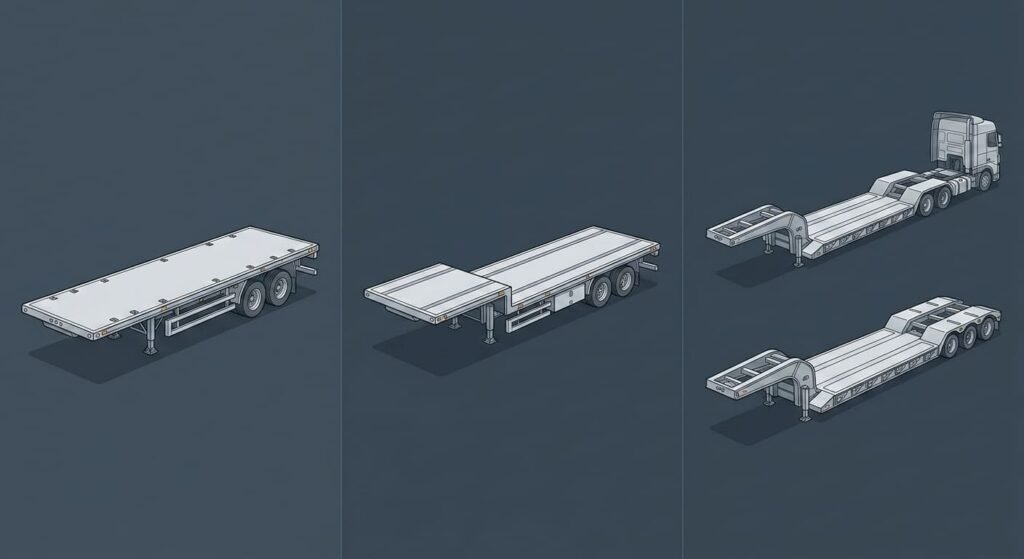
Because heavy machinery comes in all different shapes, weights, and heights, carrying them requires specialized transport trailers. Matching your equipment to the right trailer ensures a legal and safe journey:
| Trailer Type | Ideal For | Why It Is Used |
|---|---|---|
| Lowboy (RGN) Trailer | Tall Excavators, Large Bulldozers, Cranes | Sits extremely low to the ground to keep tall machinery within legal height limits under bridges. The front detaches so equipment can drive straight onto the deck. |
| Step-Deck (Drop-Deck) Trailer | Medium Tractors, Forklifts, Skid Steers | Features a dropped lower deck that provides extra height clearance for taller equipment compared to standard flatbeds. |
| Flatbed Trailer | Standard Machinery, Parts, Attachments | A completely flat, open platform ideal for machinery that can be loaded from the top or sides using a crane or forklift. |
| Specialized Multi-Axle Trailers | Super-Heavy / Superload Equipment | Extra axles distribute extreme weight evenly across the pavement to protect highway roads and bridges. |
Important Steps to Prepare Heavy Equipment for Shipping
Shipping heavy machinery requires extra care before the transport truck even arrives. Following these simple preparation steps ensures a safe haul:
1. Measure Exact Dimensions (Length, Width, Height, Weight)
Unlike standard cars, heavy equipment dimensions vary wildly. You must measure the highest point, widest edge, and total length of your machine, including all boom arms or attachments. Accurate dimensions ensure Swan secures the proper permits and trailer type.
2. Secure Loose Parts and Attachments
Lock down cabin doors, windows, and engine covers. Make sure hydraulic boom arms, buckets, or blades are lowered completely to the trailer floor and locked into place.
Unlike standard cars, heavy equipment dimensions vary wildly. You must measure the highest point, widest edge, and total length of your machine, including all boom arms or attachments. Accurate dimensions ensure Swan secures the proper permits and trailer type.
3. Clean the Machine
Washing off heavy dirt and mud makes it easier to inspect the machine for pre-existing damage. It also prevents loose rocks from flying off on the highway and breaking windshields behind the transport truck.
4. Check Weight and Fluid Levels
Drain excess fuel if required, disconnect batteries, and check for any hydraulic fluid leaks to ensure safe loading.
Oversized Loads and Special Shipping Permits
When a piece of equipment is wider than 8.5 feet, taller than 13.5 to 14 feet, or heavier than 80,000 pounds, it is officially classified as an Oversized Load (or Superload).
Shipping an oversized load requires special coordination:
State Permits: Transporting oversized machinery requires official permits from every state the truck passes through.
Escort / Pilot Vehicles: Extremely wide or long loads require escort cars with yellow flashing lights traveling in front of and behind the transport truck to alert other drivers on the highway.
Designated Routes: Drivers must follow strict, pre-approved driving routes to avoid low-clearance bridges, weight-restricted bridges, and narrow roads.
At Swan, our logistics team handles all state permit applications, route planning, and escort vehicle coordination so you do not have to worry about a thing.
Why Trust Swan with Your Heavy Equipment?
Moving heavy industrial assets requires specialized skills, heavy gear, and experienced haulers. Here is why businesses choose Swan:
Experienced Heavy-Haul Network: Our drivers are fully trained in weight distribution, heavy tie-downs, and complex oversized loading procedures.
Turnkey Permit & Escort Handling: We handle all logistics, paperwork, state permits, and escort car arrangements from start to finish.
Comprehensive Insurance Coverage: Every haul is backed by heavy-duty cargo insurance to fully protect your machinery investment.
Transparent Pricing: No hidden add-on costs or surprise permit fees—just clear, honest rates.
Need any advice or help, We're always happy to help
Skip the wait. Our experts are ready to help right now.